Fragile kitchenware is the trickiest part of any house move. Dishes are delicate, awkwardly shaped, and heavy in bulk. A full kitchen can mean plates, glasses, saucers, cups, bowls, pots, pans, and silverware, all with different packing needs.
The good news: with the right supplies and a careful routine, you can pack every piece and lose nothing on moving day. This guide walks you through it, start to finish.
Leave your everyday plates and cups for the last day. Start early with the items you don’t use every week, like fine china, wine glasses, and holiday serving pieces.
Before You Pack: Sort and Plan Ahead
Start your dish packing two to three weeks before moving day. Dishes take longer than people think. You also need clear counter space to work.
Pull everything out of your cabinets and sort into three piles:
- Pack early: fine china, holiday dishes, serving pieces, anything you use less than once a week.
- Pack last: everyday plates, bowls, and glasses you still need.
- Donate or toss: chipped plates, mismatched mugs, duplicates, and the bowl you’ve had since college.
Fewer dishes means fewer boxes, less weight, and less risk. Skip this step and you’ll pay to move things you don’t use.
Set aside a small set of everyday items for the final week. A few plates, two mugs, some silverware, and a couple of glasses will get you through to move day without reopening a packed box.
Get the Right Supplies
Gather your supplies before you touch a single dish. The wrong materials cause most breakage.
Dish Boxes
Dish boxes (also called dish barrels or dish packs) are not the same as regular moving boxes. They’re built from double-walled corrugated cardboard, so the sides and bottom don’t collapse under weight. They cost more than a standard box. They’re worth every cent when your grandmother’s china is inside.
You can buy them from any moving company or home improvement store. Olde World Movers keeps them on hand for our packing services.
Packing Paper and Bubble Wrap
Use soft, clean white packing paper. Avoid newspaper. The ink transfers and stains your plates, especially anything white or porcelain.
Bubble wrap adds a second layer of protection for delicate items. You can also use kitchen towels, dish rags, and bath towels as padding. You already own them, and they do the job.
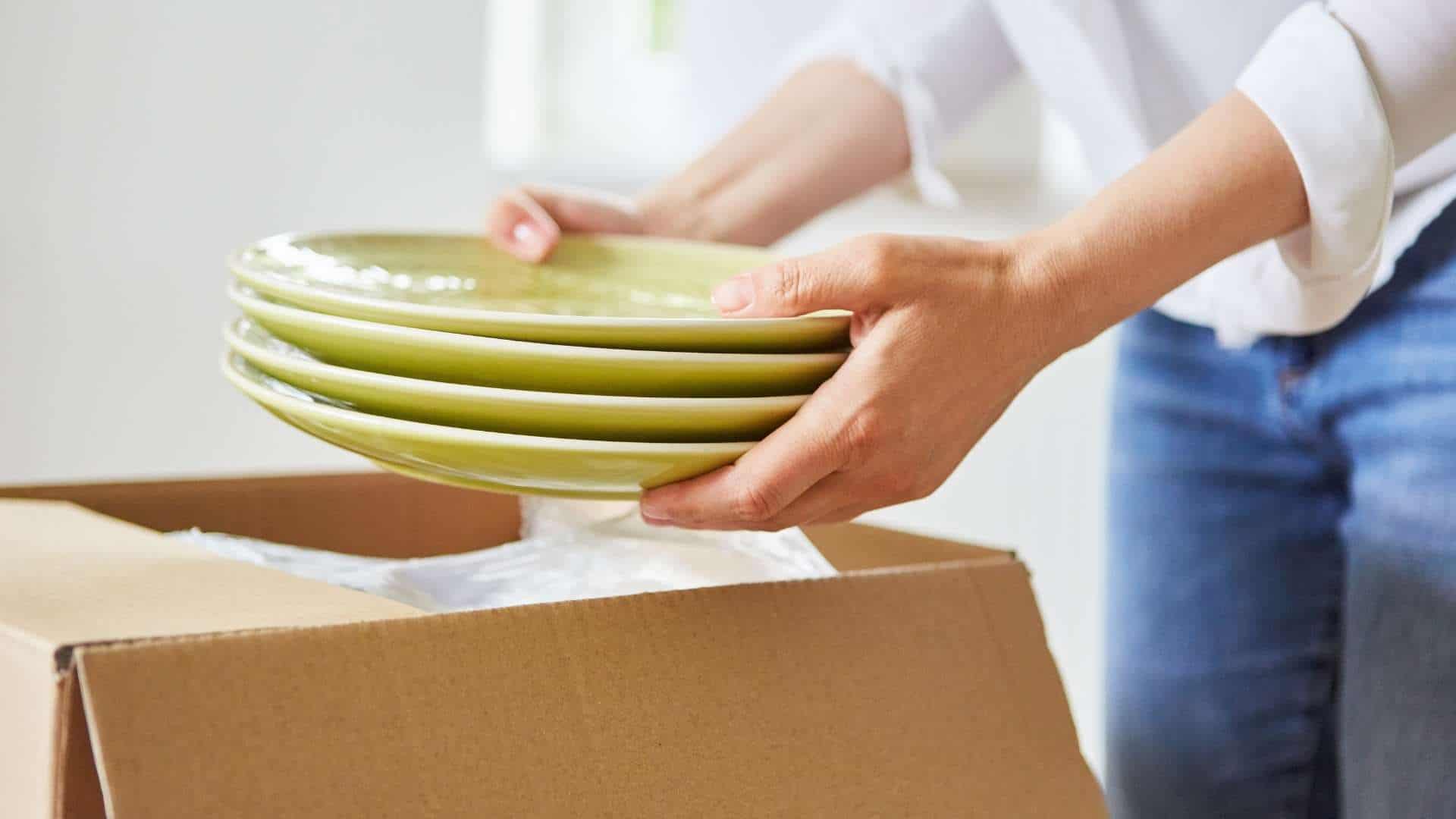
Packing Tape
Buy good packing tape, the kind rated for heavy boxes. Skip masking tape, cellophane tape, and duct tape. They either give out or leave residue on the box.
Optional but Useful
- Cell dividers (the cardboard inserts from liquor stores work) for glasses, stemware, and wine bottles.
- Permanent markers for labeling.
- A scale to check box weight before sealing. If you don’t own one, lift each packed box. If it’s a strain, repack.
Prepare Your Boxes
A collapsed box kills more dishes than a bumpy road. Reinforce every dish box before you put anything in it.
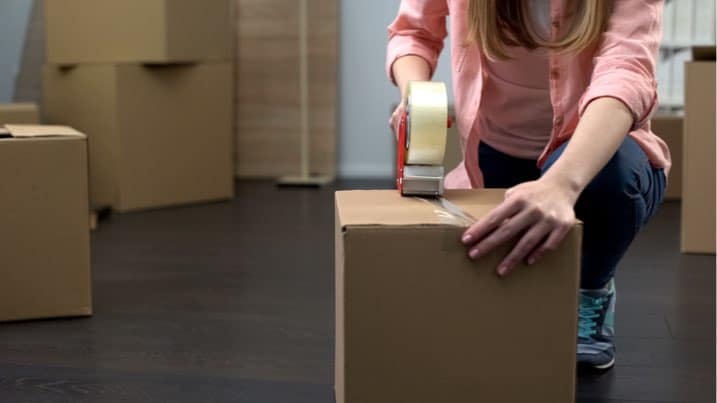
Flip the box upside down and tape the bottom seam. Run a strip down the center. Then run two more strips forming an “H” across the bottom flaps. For extra load, add a diagonal X across the whole bottom. This keeps the bottom from blowing out when you lift.
Line the inside bottom with two inches of crumpled packing paper. Add a layer of bubble wrap, then a folded towel on top. This cushion absorbs shock from below.
How to Wrap and Pack Plates
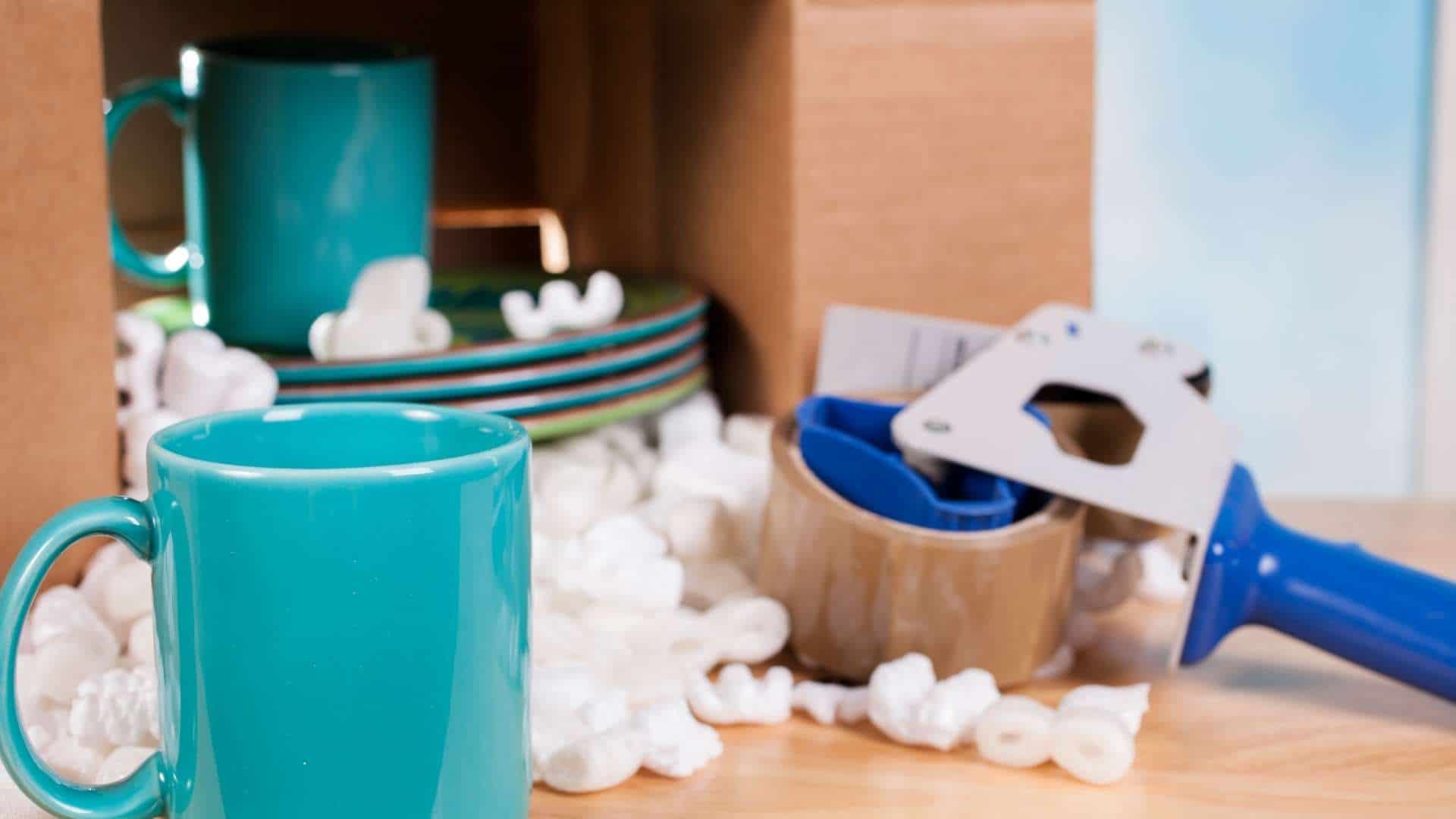
Spread packing paper on the kitchen table. Place one plate in the center. Grab one corner of the paper and fold it over the plate. Repeat with the other three corners. Tuck the ends in and secure with a small piece of tape.
Place the wrapped plate on its edge in the box, not flat.
Why Vertical?
Plates packed flat crack under the weight above them. Stacked upright, they support each other like records in a crate. That’s why a dishwasher racks plates on edge.
Add a wrapped plate, then another, filling the box in a tight row. Add bubble wrap or crumpled paper between layers. When the box is full, gently shake it. If you hear or feel movement, add more cushioning.
Cap it with a final layer of bubble wrap and seal the box.
Label the box on all four sides and on top: “FRAGILE – KITCHEN DISHES” with an arrow and the words “THIS SIDE UP.”
How to Pack Bowls
Bowls need a different approach because of their shape. Flat-wrap alone leaves the inside hollow, so pressure crushes them.
For everyday bowls:
- Crumple a sheet of packing paper and push it inside the bowl to fill the cavity.
- Wrap the outside in another sheet of paper, tucking the corners under.
- Nest like-sized bowls in stacks of three or four, with paper between each bowl.
- Wrap the full stack together with a final sheet of paper.
For fragile bowls: Pack delicate bowls (thin porcelain, decorative pieces) on their own, not nested with heavy crockery. A cast-iron bowl on top of a china one is a broken china bowl.
Load bowls into the box on their sides, not upright. Heavier bowls go on the bottom. Fill empty space with crumpled paper so nothing shifts.
How to Pack Glasses and Stemware
Glasses break for one reason: empty space inside or around them.
Step 1: Fill the inside first. Stuff crumpled packing paper into the bowl of each glass until it’s firm. This stops the glass from crushing inward.
Step 2: Wrap the outside. Lay the glass on a sheet of paper at an angle. Roll it up, tucking the ends into the glass as you go. For thin or expensive glasses, use bubble wrap instead.
Step 3: Wrap stems separately. Wine glasses and other stemware need extra care on the stem. Wrap the stem with its own sheet of paper before you wrap the bowl. The stem is where stemware snaps.
Step 4: Pack upright, handles in. Stand glasses upright in the box, not on their sides. Use cell dividers if you have them. If not, cushion between each glass with crumpled paper. For mugs, point all handles in the same direction.
Step 5: Top cushion. Add a thick layer of crumpled paper on top before sealing.
For fine crystal and expensive stemware, a dedicated stemware box with cell dividers is the safest option.
How to Pack Mugs and Coffee Cups
Handles are the weak point on every mug. They snap off in transit if you don’t protect them.
- Stuff paper into the mug to fill the inside.
- Wrap the outside, paying extra attention to the handle. Add a second layer of paper around the handle itself.
- Stand mugs upright in the box with all handles facing the same direction.
- Don’t stack one mug on top of another. Pack in a single layer with cushioning between.
How to Pack Pots, Pans, and Cookware
Cookware is heavier and more durable than your dishes, but it still needs care.
- Nest pots and pans by size, with a layer of packing paper between each one. This prevents scratches on non-stick surfaces.
- Wrap glass lids separately, like you wrap plates. They’re usually the most fragile part of your cookware.
- Wrap cast iron and heavy pots on their own. Don’t stack anything fragile on top.
- Load heavy cookware into a separate box, not mixed in with dishes. Put it on the bottom of the stack when loading the truck.
How to Pack Silverware
You have three options, depending on how your silverware is stored.
- Loose silverware: Bundle forks, knives, and spoons by type. Wrap each bundle in a dish towel or bubble wrap. Tape the bundle closed.
- Silverware tray: Leave the silverware in the tray. Wrap the whole tray in plastic wrap, then in a kitchen towel. Tape it shut.
- Sharp knives: Wrap each knife separately with the blade guarded by a cardboard sleeve or a thick fold of paper. For chef’s knives and other valuable blades, see our guide on how to pack knives when moving.
Load Order: Heaviest on the Bottom
Once your dishes are wrapped and boxed, load the box in the right order:
- Bottom of the box: heaviest items (large plates, serving platters, cast iron).
- Middle of the box: medium weight (bowls, mugs).
- Top of the box: lightest and most fragile (glasses, stemware, small china).
This rule applies to packing heavy items in any box, not just dishes.
Keep each box under 30 to 40 pounds. Heavier than that, and the box strains, your back strains, and the risk of a drop goes up.
Label Every Box Clearly
Write on at least three sides and on top of each box:
- “FRAGILE” in large letters.
- “THIS SIDE UP” with an arrow pointing to the top.
- The room (“KITCHEN”) and the contents (“Everyday Plates” or “Wine Glasses”).
Clear labels tell every mover (or friend helping you) exactly how to handle the box. They also save you hours on the unpacking end.
How to Load Dish Boxes on the Truck
Packing is only half the job. The truck load matters too.
- Dish boxes go on a flat surface, upright, with “This Side Up” facing up.
- Never stack a heavy box on top of a dish box.
- Wedge dish boxes between soft items like mattresses or sofa cushions to stop them from sliding.
- Tell your movers which boxes are dish boxes. A professional crew like Olde World Movers already knows the drill, but a clear label helps every time.
Try the Bundled Plate Method for Speed
The wrap-each-plate method above gives the best protection. If you’re short on time, the bundled method works too.
Pick up a pack of paper plates. Place a real plate in the middle of a sheet of packing paper. Put a paper plate on top. Add another real plate, then another paper plate, and so on until you have five plates stacked.
Wrap the whole bundle in packing paper and tape it closed.
Pack bundles into the box the same way as individual plates: upright, with cushioning between and around them. Check for movement by shaking the box.
Keep the box weight under 30 to 40 pounds, no matter which method you use.
Other Fragile Kitchen and Household Items
Dishes aren’t the only breakables in your kitchen or home. For other items, we have dedicated guides:
- How to pack fragile items when moving
- How to pack pictures and mirrors
- How to move art and valuables safely
Wine Bottles
Wine needs care to keep its flavor and integrity. Tell your movers ahead of time if you have a wine collection. They can bring special wine packing boxes with cell dividers.
Pack corked wine bottles upside down. This keeps the cork wet and stops it from drying out mid-move.
Use wine boxes that hold six or twelve bottles. If you don’t have them, grab standard cell boxes free from any liquor store.
Tape and reinforce the bottom of any wine box before you pack it. A wine bottle falling through the bottom is a bad day.
FAQs About Packing Dishes for a Move
How far in advance should I pack my dishes?
Start two to three weeks before moving day with fine china, holiday dishes, and anything you don’t use weekly. Pack everyday plates, cups, and bowls in the last few days before the move.
Should plates be packed vertically or horizontally?
Vertically, on their edges. Plates packed flat crack under the weight of the plates above them. Packed upright, they support each other.
How heavy should a dish box be?
Keep each dish box under 30 to 40 pounds. Heavier boxes strain the cardboard, the handles, and the person carrying them.
Can I use newspaper to pack dishes?
Avoid it. Newspaper ink transfers to plates, especially white or porcelain ones. Use clean packing paper instead. Kitchen towels and dish rags also work well as padding.
Is packing paper or bubble wrap better for dishes?
Packing paper for the base wrap, bubble wrap for extra protection on fragile pieces. Packing paper is faster, cheaper, and fills gaps better. Bubble wrap is bulkier but safer for heirlooms and crystal.
How many plates fit in a dish box?
A standard dish box holds about 30 to 40 dinner plates if packed correctly (upright, wrapped, with cushioning). Stop before the box hits 40 pounds.
Do I need dish boxes, or will regular moving boxes work?
Regular boxes work for light kitchen items. For plates, glasses, and fragile serving pieces, use dish boxes. The double-walled cardboard is the difference between a cracked box and a cracked plate.
Contact Olde World Movers
Packing dishes is one of our specialties. Our crews pack kitchens every week, and nothing about plates, china, or stemware surprises us.
If you’d rather hand the whole job off, we handle packing services in Fort Worth and across the DFW area. For a free quote on packing dishes or a full move, contact Olde World Movers today. We serve Fort Worth, Euless, Frisco, and the greater DFW metro.