When moving to a new home, one of the biggest challenges is moving heavy furniture and appliances, like refrigerators. With the right planning and proper help, moving a fridge can be a seamless task. We always recommend hiring a residential mover for this job, but in a nutshell, here’s the process.
Part 1: Prepping the Fridge for the Move
- Empty all food and take off all magnets. Remove food from the fridge and freezer, as well as items on the outside of the appliance, such as magnets, papers, menus and the like.
- Remove the shelves. Take out all removable units from inside the fridge, such as shelving, trays and organizers. Wrap those shelves in towels or packing paper and then label.
- Unplug the refrigerator. Secure the power cord with a zip tie and ensure you have properly disconnected it from the source.
- Defrost the freezer. This process can take up to eight hours to complete, so leave enough time before your move. You should do this the night before, then wipe down the inside of the fridge come the morning. Thoroughly clean the fridge at this point as well.
- Close and secure the doors. Do this using rope or bungee cord for safety. You may want to keep the doors open a bit to encourage air flow, and prevent mold or mildew from growing.
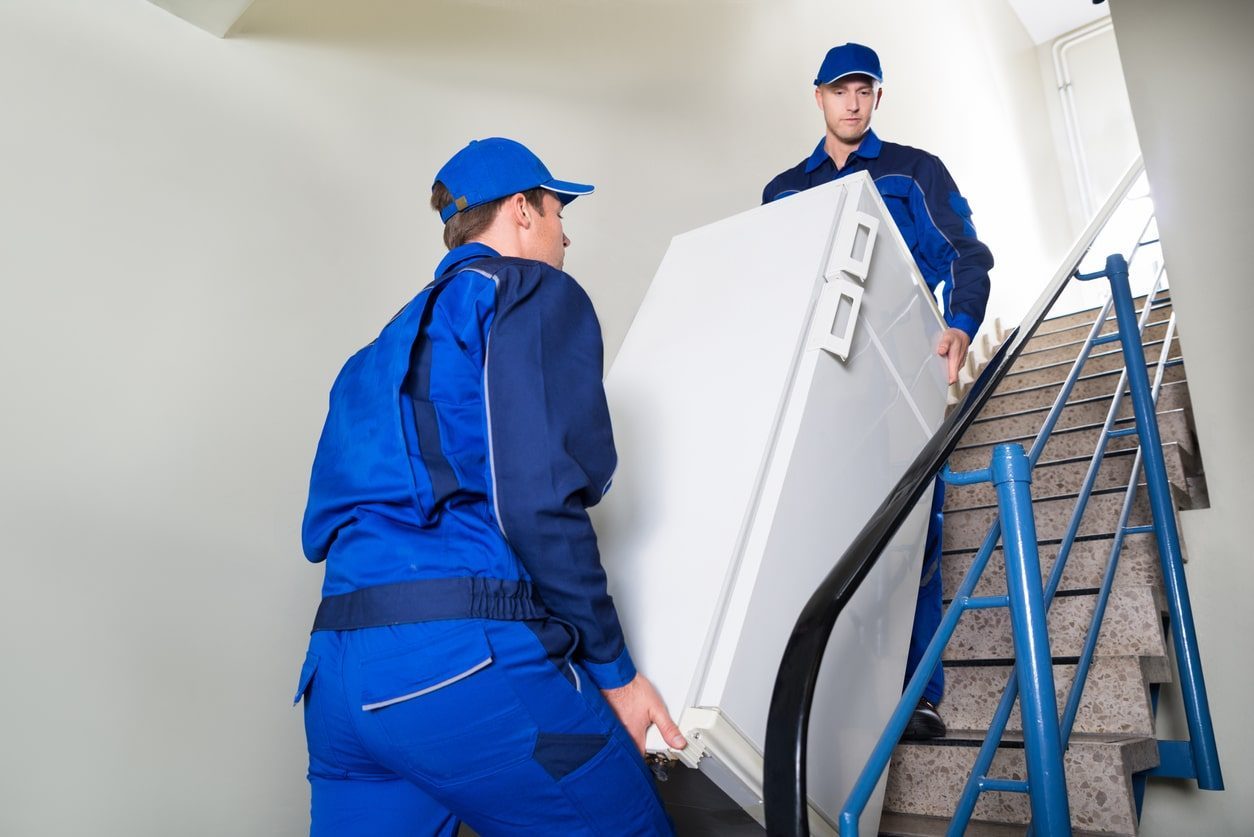
- Get help. Moving a refrigerator takes two people. Use a dolly and ask a buddy to help, but it’s always best to let your movers take care of this.
Part 2: Moving the Fridge
- Use a dolly. Make sure it has straps and that the base is big enough to rest the fridge. Keep the fridge in an upright position at all times to avoid leaking coolant.
- Move the refrigerator. Slide the dolly underneath the fridge, then lift it slowly, securing the appliance with the straps. Don’t move the fridge onto its side or back, which can cause internal damage.
- Tilt it carefully. Once on the dolly, push the fridge slowly towards the moving truck. It’s a good idea to move opposite the tilt to maintain steady balance. Have someone guide you. Going downstairs? Move it one step at a time. Communicate and never rush.
- Load the fridge. Roll it up the ramp and secure the appliance upright in the truck. You may leave it strapped to the dolly or attach it to other furniture so it doesn’t shift.
- Move the fridge into the new digs. The refrigerator should sit for a minimum of three hours before hooking it back up so oil and fluid will have a chance to flow normally.
Tools and Equipment You Need to Move a Refrigerator
The right gear cuts risk and effort in half. Gather these before you touch the fridge.
- Appliance dolly with straps. Not a regular hand truck. Appliance dollies have a wider base, a taller back, and built-in ratchet straps that lock the fridge in place.
- Moving blankets. Wrap the fridge to protect the finish and the door seals. Two blankets is the minimum for a full-size unit.
- Furniture straps or forearm lifting straps. These shift weight to your legs and lower the chance of back injury.
- Zip ties or bungee cord. Secures the power cord and keeps doors shut during transit.
- Loading ramp. Needed for truck loading. Standard ramps on a rental truck work for most residential units.
- Work gloves. Improves grip and protects your hands on metal edges.
- Measuring tape. Measure the fridge, doorways, and any tight turns before you start.
If you do not own these tools, most residential moving crews bring the full kit on the truck.
How to Pull a Refrigerator Out From the Wall (for Cleaning or Access)
Sometimes you don’t need to move the fridge out of the house, you just need to slide it out to clean behind it or reach the coils. Here’s the safe way.
- Unplug it first. Never work near a live power cord, especially if there’s a water line involved.
- Turn off the water line. If you have a water dispenser or ice maker, shut the valve behind the fridge.
- Protect the floor. Lay cardboard or a moving blanket under the fridge feet to prevent scratches on hardwood or tile.
- Rock and walk. Grip the top corners, pull one side an inch forward, then the other. Repeat. This “walking” method keeps older, wheel-less fridges upright and stable.
- Clean the coils. Vacuum the condenser coils on the back or underneath. Dusty coils make the fridge work harder and raise your power bill.
- Walk it back. Reverse the same rocking method. Check that the water line and power cord are not pinched before you push the fridge flush to the wall.
For built-in or tight-fit units, remove the kick plate first and check the manufacturer’s manual. Forcing a built-in fridge can crack the cabinet.
How to Move a Refrigerator by Yourself (And When You Shouldn’t)
Short answer: don’t, if you can avoid it. A full-size fridge weighs 200 to 400 pounds. One person plus an appliance dolly is possible on flat ground, but the risk of injury and damage is real.
When solo might work
- The fridge is a compact or mini unit under 150 pounds.
- You are only moving it across one level, no stairs.
- You have an appliance dolly with straps.
- The path is wide, flat, and clear.
When to stop and call for help
- Stairs of any kind. Down is worse than up, and both are dangerous solo.
- Tight corners or narrow doorways where you cannot pivot the dolly.
- Any full-size, French door, or commercial-grade unit.
- Any point where you feel the fridge tipping. Lower it to rest and rethink.
Back injuries during appliance moves are common. Read our guide on avoiding common injuries when moving before you try this alone.
How to move a fridge without a dolly
If you do not have a dolly, the safest option on level floor is furniture sliders under each foot, plus two people walking it slowly. This only works short distances on smooth flooring. Never attempt stairs, thresholds, or uneven ground without a proper appliance dolly.
How to Move a Freezer: Upright, Chest, and Commercial Units
Freezers follow the same basic steps as refrigerators, with a few differences.
Upright freezers. Treat them like a slim refrigerator. Defrost for 8 to 24 hours, drain the water, wipe dry, and move upright on an appliance dolly.
Chest freezers. These are heavier and wider than uprights. The lid is a hinged weight, so secure it with bungee cord or packing tape. Chest freezers can sometimes be tilted for short distances, but do not lay them flat for long transport. Moisture can pool in the compressor and cause damage.
American-style fridge freezers. These large combo units can top 350 pounds. Two movers and a full-size appliance dolly are mandatory. Measure door widths twice before moving day.
Commercial freezers and walk-ins. Do not attempt these yourself. Commercial units often exceed 500 pounds and may hold pressurized refrigerant. Restaurants and retail kitchens should book a commercial moving crew with the right equipment, insurance, and permits.
How to Load and Unload a Refrigerator From a Moving Truck
Loading is where most fridges get damaged. Follow this order.
- Load the fridge first or last, not in the middle. You want it strapped to a wall, not buried under boxes.
- Use the ramp slowly. Two people. One guides from inside the truck, one pushes from behind.
- Tie it off. Strap the fridge to the truck’s wall anchors in at least two spots. Chest straps go around the body, not over the doors.
- Pad the sides. Put moving blankets between the fridge and any other furniture or boxes.
- Unload in reverse. Keep it upright. Never let the dolly tip past 45 degrees on the ramp.
For more on truck loading order, read how to pack a moving truck like the pros.
Brand-Specific Moving Notes
Most residential fridges follow the same process. A few brands have quirks worth knowing.
Samsung, LG, Whirlpool, GE, and Frigidaire. Most residential models need 2 to 4 hours of upright settle time before you plug them back in. If the fridge was tilted past 45 degrees during the move, wait 24 hours. Always check the owner’s manual for exact times, as they vary by model.
Sub-Zero and other high-end built-ins. Do not move these yourself. Sub-Zero recommends a certified service professional handle any relocation, and your warranty may not cover a DIY move. Book a specialty appliance crew instead.
French door and counter-depth models. Measure the doorway, hallway, and any stair turns before moving day. Many French door units are wider than standard doorways and require door removal.
Need Refrigerator Movers in DFW? Here’s What We Handle
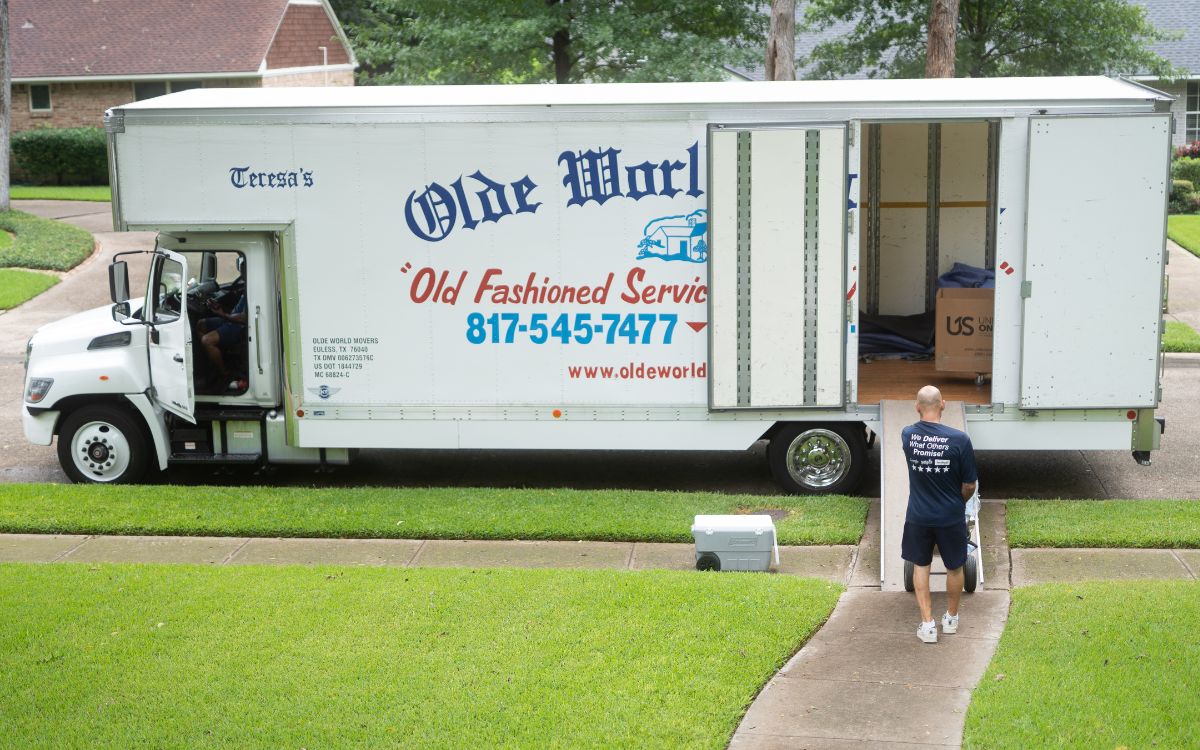
Olde World Movers is a local appliance and residential moving company with offices in Euless, Fort Worth, and Frisco. We move fridges, freezers, washers, and other heavy appliances across the Dallas-Fort Worth metro every day.
What comes standard on an appliance move with us:
- Two-person crew minimum
- Full appliance dolly and strap kit
- Moving blankets and floor protection at both addresses
- Upfront quote with no surprise fees
- A+ BBB rating, licensed and insured crews
We serve Fort Worth, Dallas, Frisco, Euless, and most of DFW. Get a free estimate in under five minutes.
FAQ: Moving a Refrigerator
Do you have to unplug a fridge before moving it?
Yes. Unplug at least 8 hours before the move so the freezer can defrost and the compressor can cool. Moving a plugged-in or warm fridge risks compressor damage.
How long do you have to defrost a fridge before moving?
Plan on 4 to 8 hours minimum. Older units or fridges packed with ice may need up to 24 hours. Defrost overnight, then wipe dry in the morning.
Can you lay a refrigerator on its side to move it?
It’s not recommended. Laying a fridge flat can push compressor oil into the cooling lines. If you have no choice, keep the tilt as short as possible and let the fridge sit upright for 24 hours before plugging it back in.
How long should a fridge sit after moving before you plug it in?
At least 2 to 4 hours if it stayed upright the entire move. Wait a full 24 hours if it was tilted past 45 degrees or laid flat.
Can one person move a refrigerator?
On flat ground with an appliance dolly, yes, but it’s risky. Stairs, tight doorways, or a full-size unit should always be a two-person job. Hire a pro if you are unsure.
How do you move a fridge without a dolly?
Use furniture sliders under each foot and two people to walk it across smooth flooring. This only works short distances on level ground. Never try stairs without a dolly.
How much does it cost to hire movers to move just a refrigerator?
Cost depends on distance, stairs, crew size, and whether the water line needs disconnecting. Request a quote for a number based on your exact move.
Do movers disconnect the water line on a fridge?
Most professional crews, including Olde World Movers, disconnect and reconnect a standard push-fit water line. For ice-maker lines tied into complex plumbing, we recommend a licensed plumber handle the reconnect.
What’s the best way to transport a refrigerator?
Upright, strapped to an appliance dolly, and tied to the wall of the moving truck. Keep the doors secured shut with bungee cord and pad the sides with moving blankets.
Contact Olde World Movers
Our team is well-versed in moving heavy appliances such as refrigerators. Don’t break your back, hire us instead. Contact us to get a free quote.