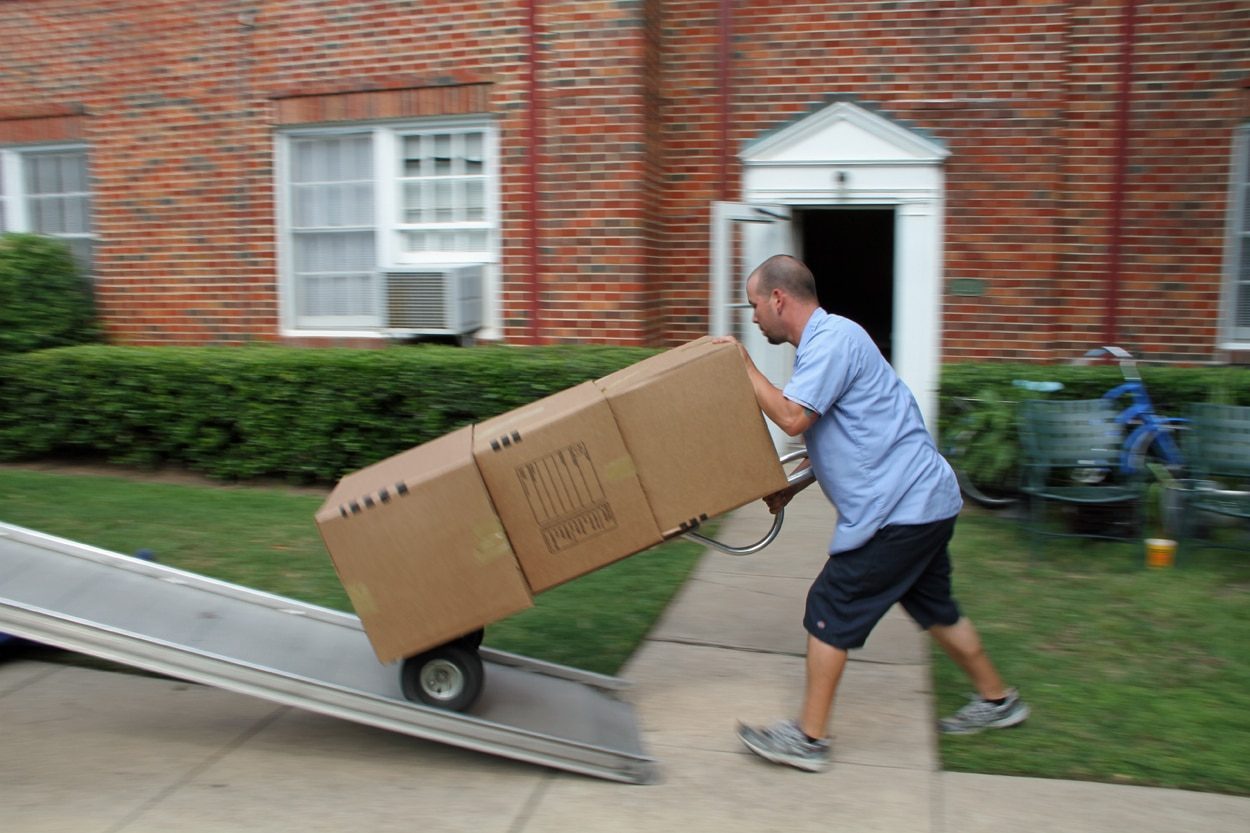
Moving is grueling, back breaking work. If you’re not in shape, have the right equipment, or can devote the time to moving properly, it’s a no-brainer to hire a residential mover to handle the process for you.
If you’re not accustomed to lifting heavy weights or awkward objects such as furniture, yet you’re determined to tackle your own move, here are some tips on how to avoid common injuries.
Know the Most Common Moving Injuries
Most moving injuries fall into a few clear groups. Knowing them helps you protect the right spots before you lift a single box.
- Back strains and sprains. Bending, twisting, and hauling load the lower back. This is the most common moving injury by far.
- Knee and ankle injuries. Carrying weight on stairs or uneven ground rolls ankles and twists knees.
- Shoulder and neck strain. Lifting overhead or wrestling bulky furniture overloads these joints.
- Crushed fingers and toes. Dropped boxes and slammed doors break small bones fast.
- Cuts and scrapes. Box cutters, staples, and sharp furniture edges cause most of these.
One quick distinction helps later. A strain injures a muscle or tendon. A sprain injures a ligament. Both share similar symptoms, so treat any sharp pain seriously.
Prepare Yourself
Because moving is a workout, you have to prepare for that workout just like you would at the gym. Do some simple stretches beforehand to get limbered up. This will make it easier for you to sustain exertion over long periods of time. Moving day will be very long and strenuous, so don’t skip this part, or you could be more vulnerable to injury.
Be sure to hydrate, too, and ply yourself with energy-fueling snacks. Did you know that moving burns more than 250 calories per hour? Heavy furniture can push that number past 400. You need to keep your strength up if you’re going to go the distance.
Start in a Safe Position
Before you lift any objects, think it through. Know in advance where the box or other object is going to be placed and how you will move it there. Don’t be afraid to ask someone for help if something seems too heavy to move, or break it down into smaller units, advises the Mayo Clinic.
When lifting something from the floor, stand close to the box. Don’t just bend over and lift from a standing position while locking your knees. You could also kneel on one knee and lift from there.
Lift Properly
Proper lifting technique will help you to avoid injury, as doing this incorrectly can result in spinal injuries, torn ligaments, and more. In fact, the most common moving injuries are caused by lifting simple boxes incorrectly.
Follow these proper lifting techniques:
- Make sure the weight is evenly distributed in the box
- Spread your feet to about shoulder length apart
- Bend at the knees
- Do not hunch over
- Breathe in before lifting the box, then exhale as you lift it. This will compress your abdominal muscles while supporting the spine.
- Straighten your legs to pick up the box without lifting your torso.
Use the Right Moving Equipment
The right gear does the work your back should not. A few basic tools cut your injury risk on moving day.
- Dolly or hand truck. Roll heavy boxes and appliances instead of carrying them.
- Furniture straps. Forearm and shoulder straps shift weight off your back and improve your grip.
- Furniture sliders. Slide heavy pieces across the floor so you never have to lift them.
- Moving blankets. Padding protects your hands, your furniture, and your walls.
- Work gloves. A firm grip prevents drops and guards against cuts.
If you would rather skip the gear and the risk, our professional packing services and full-service residential moving team bring the right equipment to every job. For heavy or delicate pieces, see our piano, antique, and art moving service.
Watch Your Step
Falls are another common injury when moving, as you often have to navigate tight spots and stairs. It’s tough to regain your balance when carrying heavy loads, so be aware of the fall risks as you go. Clear a designated path to the outside beforehand so you don’t have to clear debris or keep your head down when carrying boxes.
Wear the appropriate footwear, and make sure the path to get outside isn’t slippery. Rubber-soled tennis shoes, sneakers or boots are good choices. Stay away from open-toed shoes.
Know Your Limits
If you are overstraining yourself by taking on too much in one day, you could sustain an injury. Those injuries are even more likely when you’re exhausted and are trying to rush. Take frequent breaks to sit, gather yourself, and hydrate. Take this time to re-evaluate your plan and make sure it’s still working. You may have to make adjustments based on time.
Let someone else take over the heavy lifting if it’s getting to be too much. It’s a good idea to keep one room empty and closed off. In the summer, make sure the AC is running so you can have a cool spot to retreat to when you need a break.
Of course, the best way to keep common injuries at bay when moving is to hire professional movers and packers. They will pack and haul all your heavy objects out of the house, onto the truck and into the new house.
Expert movers make the process stress-free, and pain-free too. When you’re not injured, you can start enjoying your new home and neighborhood right away.
What to Do If You Get Hurt
Even careful movers tweak something now and then. Act fast to keep a minor injury minor.
- Stop right away. Pushing through pain turns a small strain into a long recovery.
- Rest, then ice. For a minor strain or sprain, rest the area and ice it for 15 to 20 minutes at a time during the first day or two.
- Support and elevate. A snug wrap, not a tight one, plus a raised limb helps control swelling.
- Watch for red flags. Severe pain, a popping sound, numbness, or a joint that won’t bear weight needs a doctor.
Whether it is a strain or a sprain, early care looks the same. See a professional if the pain or swelling does not improve within a couple of days.
Moving Injury FAQs
What is the most common moving injury?
Back strains top the list. Heavy lifting and twisting put the most stress on the lower back, which makes it the spot most likely to get hurt.
How do I lift heavy boxes without hurting my back?
Stand close to the box, bend at the knees, and keep the load near your body. Lift with your legs, not your back, and never twist while you carry it.
What should I wear on moving day?
Closed-toe shoes with good grip, breathable clothes, and work gloves. Skip sandals, flip-flops, and loose layers that can snag or slip.
Should I hire movers to avoid injury?
If you have heavy furniture, stairs, or a history of back pain, yes. A crew brings the people and the equipment to do the job safely. Get a free moving estimate to compare your options.
Contact Olde World Movers
Olde World Movers takes care of all the heavy lifting so you and your family stay safe. Wherever you’re moving in Fort Worth, Frisco or Euless, call us for a free estimate. We offer full-service moves that include packing, storage, and even piano moving for your peace of mind.