
Moving with a family is not the same as moving alone. You have toddlers who do not understand why their room is in boxes. You have teens who would rather stay behind than leave their friends. You have a dog who starts shaking the second the tape gun comes out. And somewhere in the middle, you are trying to hold the whole plan together.
Research from the National Institute of Health found that roughly 30% of children ages 5 to 15 show signs of anxiety during a move. A separate study from Boston College, published in Child Development, found that each additional move a child goes through is linked to lower reading and math scores, weaker social skills, and more behavioral issues. The good news is that parents can reduce this stress with structure, age-appropriate tasks, and clear communication.
This guide breaks the process down by age group so every person in your household, including the four-legged ones, has a role on moving day.
Why Kids Need a Role During the Move
Children process change differently than adults. A six-year-old does not worry about mortgage rates or lease timelines. They worry about losing their favorite stuffed animal or never seeing their neighbor again.
Giving children specific tasks during a move does two things. First, it shifts their focus from what they are losing to what they can control. Second, it builds confidence. When a child packs their own box and labels it, that box becomes their contribution to the family effort. They own a piece of the process.
This is true across all ages. The American Psychological Association has studied the long-term effects of childhood moves and found that outcomes improve when families maintain routine and give children a sense of agency during the transition.
If you are moving with young children for the first time, start here. The structure matters more than the speed.
Toddlers and Preschoolers (Ages 2 to 6)
Young children pick up on stress fast. They may not understand what “moving” means, but they notice the tension in your voice and the missing furniture in the living room.
Keep things simple. Give them jobs that feel like play.
- Let them decorate their moving boxes with stickers or washable markers.
- Ask them to pack soft items from their room, like stuffed animals or board books.
- Create a “special box” together with their favorite toys, a blanket, and snacks. This box stays with them on moving day, not on the truck.
- Use picture labels instead of written ones so they can identify their boxes.
Prepare a moving day kit ahead of time with coloring pages, a small activity toy, and a water bottle. If you have a long drive from Fort Worth to a new city, this kit becomes your best tool for keeping the car peaceful.
One detail parents often miss: say goodbye to the old house with your child. Walk through the rooms. Let them touch the walls. It sounds small, but it gives young kids closure on a level they can understand.

School-Age Kids (Ages 7 to 12)
Kids in this range can do real work. They can pack their own rooms, help sort items for donation, and understand a basic moving timeline. The key is to frame these tasks as responsibilities, not chores.
- Have them pack their school supplies, books, and room decorations.
- Let them number or color-code their boxes. This also helps your movers on delivery day.
- Give them a clipboard and a short inventory list for their room. Kids this age respond well when you treat them like part of the team.
- Explore the new neighborhood together. Pull up Google Maps and point out parks, schools, and libraries near your new home.
If your family is relocating within the DFW area, take a weekend drive to the new neighborhood. Grab lunch nearby. Let them see the parks in Frisco or walk through a local community center. Familiarity reduces fear.
A note on school transitions: research published in Child Development found that changing schools has a stronger effect on emotional well-being than the move itself. If you can time your move to align with a natural school break, that buffer helps. If not, connect with the new school’s counselor before the first day. A warm introduction goes a long way.
Teens (Ages 13 to 18)
Teens are the hardest group to move. Their social networks are deep. Their identity is tied to their school, their friends, and their routines. A move can feel like a personal loss to them, even when it is the right call for the family.
Do not minimize this. Acknowledge it. Then give them ownership.
- Let them build the family moving calendar. Teens respond to leadership, not instruction.
- Assign them a shared space to manage, like the garage, pantry, or living room. Give them full responsibility for packing and labeling that area.
- Ask them to research the new neighborhood. Gyms, restaurants, job openings for part-time work, trails, community events. This shifts their mindset from loss to discovery.
- Encourage them to document the move through photos or video. Saying goodbye to an old home on camera gives them a way to process the transition.
On move-out day, teens can handle final room checks, light cleaning, and trash removal. These are real contributions that earn real respect.
If your teen is switching school districts, whether from Fort Worth ISD to Frisco ISD or from HEB ISD in Euless to another district, start the enrollment paperwork early. Waiting until the last week creates unnecessary stress for everyone.
How to Move with Pets Without the Chaos
Pets react to packing the same way toddlers do. They sense the disruption. Dogs may pace, bark more, or refuse food. Cats may hide. Both can attempt to escape through open doors on loading day.
Cornell University’s College of Veterinary Medicine recommends keeping your pet in a quiet, closed room on moving day with familiar bedding, toys, and water. If that is not possible, boarding your pet or leaving them with a trusted friend is the next best option.
Here is a practical checklist for pet owners:
- Two weeks before the move: Visit your vet. Update vaccinations, get copies of medical records, and ask about calming supplements or medication if your pet is anxiety-prone.
- One week before: Update your pet’s ID tags and microchip registration with your new address. If your pet bolts during the move, current contact info is the fastest way to get them back.
- Moving day: Pack their food, bowls, leash, bed, and a few toys in a separate bag. Load this last so you can unload it first at the new house.
- First week in the new home: Keep your dog on a leash in the yard until they learn the boundaries. Let your cat explore one room at a time. Stick to the same feeding and walking schedule.
Do not leave your dog unattended in an unfenced yard at the new house. Dogs have been known to jump fences or dig under them trying to return to their old territory.
If you are moving across the DFW area and need storage for the transition, keep pet supplies out of storage. Those items should stay accessible at all times.
The Parent Checklist: Managing the Whole Operation
You are the project manager of this move. That means the plan starts and ends with you. Here is a working checklist to keep things on track.
Eight weeks out:
- Set a moving budget. Include moving company costs, packing supplies, storage, and an emergency buffer.
- Get a free estimate from a licensed, insured moving company. Compare at least two or three options.
- Start packing low-use rooms: guest bedrooms, storage closets, holiday decorations.
Four weeks out:
- Notify your children’s schools. Request records transfers.
- File address changes with the post office, your bank, and your insurance providers.
- Sort and declutter room by room. Donate, sell, or toss items you do not need.
One week out:
- Confirm your move date with your local or long-distance movers.
- Pack a family essentials box with toiletries, phone chargers, medications, a change of clothes, and important documents.
- Walk through every room with a checklist. Flag fragile and high-value items for your moving team.
Moving day:
- Assign each family member their role for the day (based on the age-group sections above).
- Keep the essentials box, the toddler kit, and the pet bag in your car, not on the truck.
- Do a final walkthrough before you lock the door.
If you are managing a move with antiques, a piano, or fine art, flag those items early. Specialty items need specialty handling, and your movers should know about them before they arrive.
Keep the Family Connected Through the Move

A move does not have to break your family rhythm. It can strengthen it if you build shared moments into the process.
Play music while you pack. Let each person pick a few songs. Order takeout after you finish a room. Take a break and walk through a local park together, whether that is Trinity Park in Fort Worth, Bob Eden Park in Euless, or Frisco Commons.
Before you leave the old house, make a simple memory page. Let each family member write one thing they loved about the home. Tape it to the fridge for the new owners, or keep it in a family scrapbook. These small rituals give the move meaning beyond logistics.
Why Fort Worth Families Trust Olde World Movers
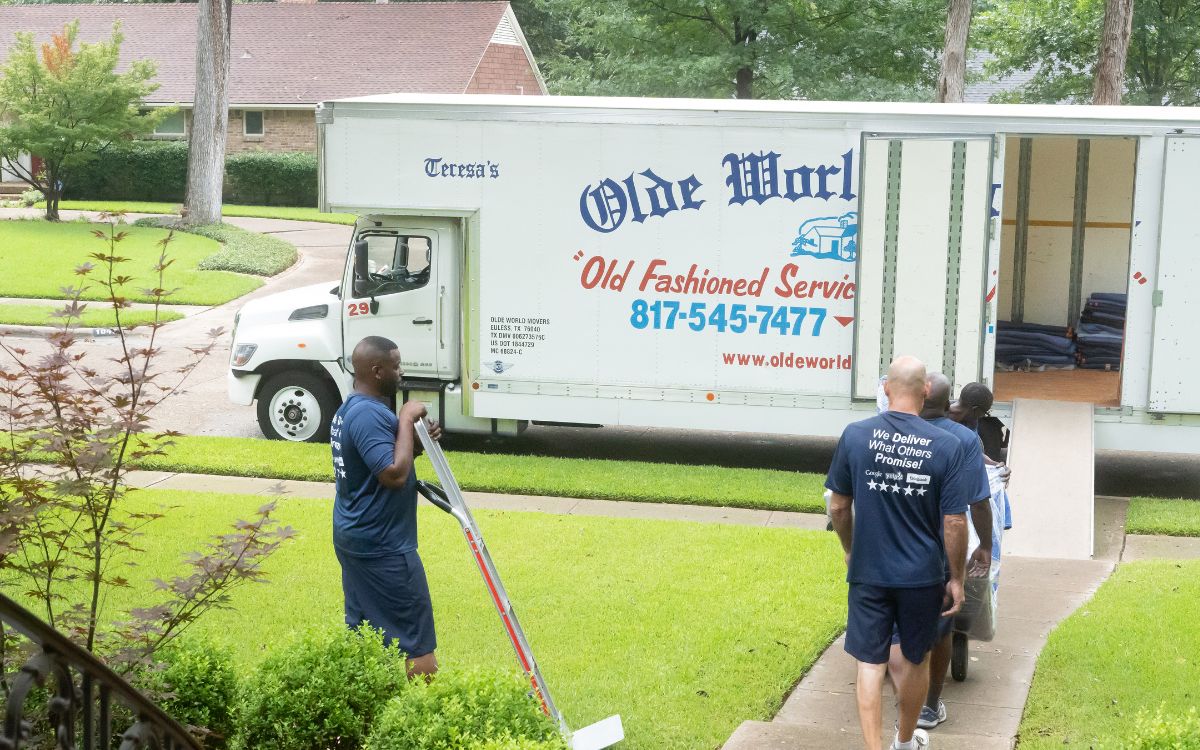
Olde World Movers has helped families across Tarrant County, Denton County, and Dallas County relocate for over 30 years. We operate out of Fort Worth, Frisco, and Euless, and we handle local residential moves and long-distance relocations across Texas and beyond.
Our crews are trained to handle fragile items, oversized furniture, pianos, and fine art. We offer full-service packing, custom packing plans, and climate-controlled storage in Euless for families who need extra time between move-out and move-in.
Every family move we take on starts with a free, no-obligation estimate. Call (817) 497-2025 or request your estimate online.
Frequently Asked Questions
How do I help my child adjust to a new home after a move?
Keep daily routines consistent. Eat meals at the same times. Stick to the same bedtime. Let your child set up their own room as early as possible so they have a familiar space. If your child shows persistent signs of anxiety or withdrawal after two to three weeks, talk to their pediatrician.
What is the best age to move with kids?
No age is ideal, but younger children (under 5) and older teens (17 to 18) tend to adjust faster. School-age children between 7 and 12 often have the hardest time because their social bonds are strong but their coping skills are still developing. Timing a move during summer break gives any age group a smoother transition.
How far in advance should I start preparing my family for a move?
Start talking about the move at least six to eight weeks before moving day. Begin packing low-priority rooms four weeks out. Assign family tasks two weeks out. The more structure you build into the timeline, the less chaotic the final week feels.
Should I move my pet separately or with the family?
For local moves, keep your pet with you but in a quiet, secure space away from the loading and unloading. For long-distance moves, talk to your vet about whether your pet should travel by car with you, stay with a sitter, or use a professional pet transport service. Each option depends on your pet’s temperament and health.
How can I reduce moving stress for my whole family?
Break the move into phases. Assign age-appropriate tasks. Celebrate small milestones like finishing a room. Hire professional movers so the physical labor does not fall on you alone. And give every family member, including the dog, a role in the process.